


𝐖𝐡𝐚𝐭 𝐩𝐥𝐚𝐜𝐞 𝐝𝐨 𝐢𝐧𝐬𝐭𝐢𝐧𝐜𝐭𝐬, 𝐞𝐦𝐨𝐭𝐢𝐨𝐧𝐬, 𝐚𝐧𝐝 𝐟𝐞𝐥𝐭 𝐞𝐱𝐩𝐞𝐫𝐢𝐞𝐧𝐜𝐞 𝐡𝐚𝐯𝐞 𝐢𝐧 𝐨𝐮𝐫 𝐜𝐮𝐫𝐫𝐞𝐧𝐭 𝐭𝐢𝐦𝐞?
 Having lived in both the global south and the global north, I’ve observed how rational thinking tends to dominate public life in the West. It’s visible even in everyday advertising: the percentage of germs killed by a toothpaste, the proportion of people who prefer a certain shampoo, or the satisfaction rating of the latest razor. Numbers give us the feeling of certainty and control.
But how does this rational emphasis shape our understanding of the mind—and of psychotherapy?
𝐈𝐧 𝐭𝐨𝐝𝐚𝐲’𝐬 𝐭𝐢𝐦𝐞, 𝐫𝐚𝐭𝐢𝐨𝐧𝐚𝐥𝐢𝐭𝐲 𝐢𝐬 𝐨𝐟𝐭𝐞𝐧 𝐭𝐫𝐞𝐚𝐭𝐞𝐝 𝐚𝐬 𝐭𝐡𝐞 𝐢𝐝𝐞𝐚𝐥: a way to create order out of chaos, to create clarity. 𝐘𝐞𝐭 𝐟𝐫𝐨𝐦 𝐚 𝐉𝐮𝐧𝐠𝐢𝐚𝐧 𝐩𝐞𝐫𝐬𝐩𝐞𝐜𝐭𝐢𝐯𝐞, 𝐭𝐡𝐞 𝐢𝐫𝐫𝐚𝐭𝐢𝐨𝐧𝐚𝐥—𝐨𝐮𝐫 𝐢𝐧𝐬𝐭𝐢𝐧𝐜𝐭𝐬, 𝐞𝐦𝐨𝐭𝐢𝐨𝐧𝐬, 𝐬𝐨𝐦𝐚𝐭𝐢𝐜 𝐫𝐞𝐬𝐩𝐨𝐧𝐬𝐞𝐬, 𝐚𝐧𝐝 𝐮𝐧𝐜𝐨𝐧𝐬𝐜𝐢𝐨𝐮𝐬 𝐩𝐫𝐨𝐜𝐞𝐬𝐬𝐞𝐬—𝐢𝐬 𝐞𝐪𝐮𝐚𝐥𝐥𝐲 𝐟𝐮𝐧𝐝𝐚𝐦𝐞𝐧𝐭𝐚𝐥 𝐭𝐨 𝐰𝐡𝐨 𝐰𝐞 𝐚𝐫𝐞. Jung did not see the irrational as a flaw or weakness, but as a valid and essential aspect of the psyche. It is through these irrational channels that we often receive our deepest signals: a sense of unease, a flash of insight, a bodily response rooted in earlier experience.
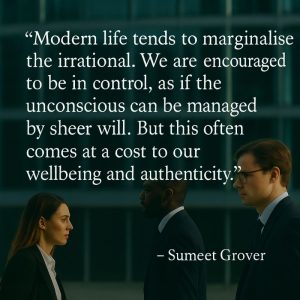
Modern life tends to marginalise the irrational. We are encouraged to be in control, as if the unconscious can be managed by sheer will. But this often comes at a cost to our wellbeing and authenticity.
𝐃𝐞𝐩𝐭𝐡 𝐩𝐬𝐲𝐜𝐡𝐨𝐭𝐡𝐞𝐫𝐚𝐩𝐲 𝐭𝐚𝐤𝐞𝐬 𝐚 𝐝𝐢𝐟𝐟𝐞𝐫𝐞𝐧𝐭 𝐚𝐩𝐩𝐫𝐨𝐚𝐜𝐡.
It recognises that psychological wholeness comes not from controlling the irrational, but from integrating it with the rational; it comes from integrating the opposing forces within the psyche, such as love and hate, desire and self-control, fulfillment and disappointment. This process allows us to live more fully—to be able to meet the demands of our time without being defined by them.
𝐒𝐨—𝐰𝐡𝐨 𝐚𝐫𝐞 𝐲𝐨𝐮, 𝐛𝐞𝐧𝐞𝐚𝐭𝐡 𝐭𝐡𝐞 𝐬𝐮𝐫𝐟𝐚𝐜𝐞? 𝐀𝐧𝐝 𝐰𝐡𝐨 𝐡𝐚𝐯𝐞 𝐲𝐨𝐮 𝐚𝐥𝐰𝐚𝐲𝐬 𝐰𝐚𝐧𝐭𝐞𝐝 𝐭𝐨 𝐛𝐞?
If these questions resonate, you can learn more about my work here.